
Rule of Thumb
If your garage door won't budge on a cold Hamilton County morning, it's almost never actually frozen solid to the slab — it's usually humidity, rust, or stiff hardware doing something more mechanical. The exception: after a rare hard freeze or a night of heavy dew followed by a quick temperature drop, the rubber bottom seal can genuinely bond to a damp concrete slab, especially on doors that sit low with worn weatherstripping. That's the one case where "frozen" is literal.
What You'll Notice First
- The door looks stuck at the bottom, even though the opener motor is running
- The opener hums, strains, or clicks but the door doesn't lift
- The door starts up, then reverses or stops partway
- Movement is noticeably slower or jerkier than usual
- You hear grinding, popping, or a dragging sound along the tracks
None of these symptoms tell you the cause by themselves — that's why a technician checks things in a specific order, starting with the simplest and most common.
What a Technician Checks, in Order
1. The Bottom Seal and Threshold
First check is always the weatherstripping along the bottom of the door. After a cold night with heavy condensation, that rubber seal can stick to a damp slab like an ice cube to a freezer shelf. The fix is simple: gently break the seal with light upward pressure (never force the opener through it), then check whether the seal is cracked, flattened, or no longer sitting flush. A worn seal gets replaced — a fresh one resists sticking and also does a better job blocking wind-driven rain during storm season.
2. Rust and Corrosion on Tracks and Hinges
Next is the hardware itself. Jasper's humidity swings — hot, wet summers followed by cooler, damp nights — are exactly the conditions that cause surface rust on tracks, rollers, and hinges, even well inland. Rust adds friction, which feels like the door is "stiff" or sluggish rather than stuck. The fix involves cleaning the rust with a wire brush, checking the rollers for pitting, and replacing any hardware that's corroded enough to bind rather than roll.
3. Old or Washed-Out Lubricant
If the hardware looks fine, lubrication is next. Grease that hasn't been refreshed in a while can thicken in cooler temperatures, and lubricant on exposed hinges gets washed away by the region's frequent afternoon downpours. A technician will clean off old residue and apply a silicone-based lubricant (not household oil, which attracts dust and grime) to rollers, hinges, and the track.
4. Spring Tension
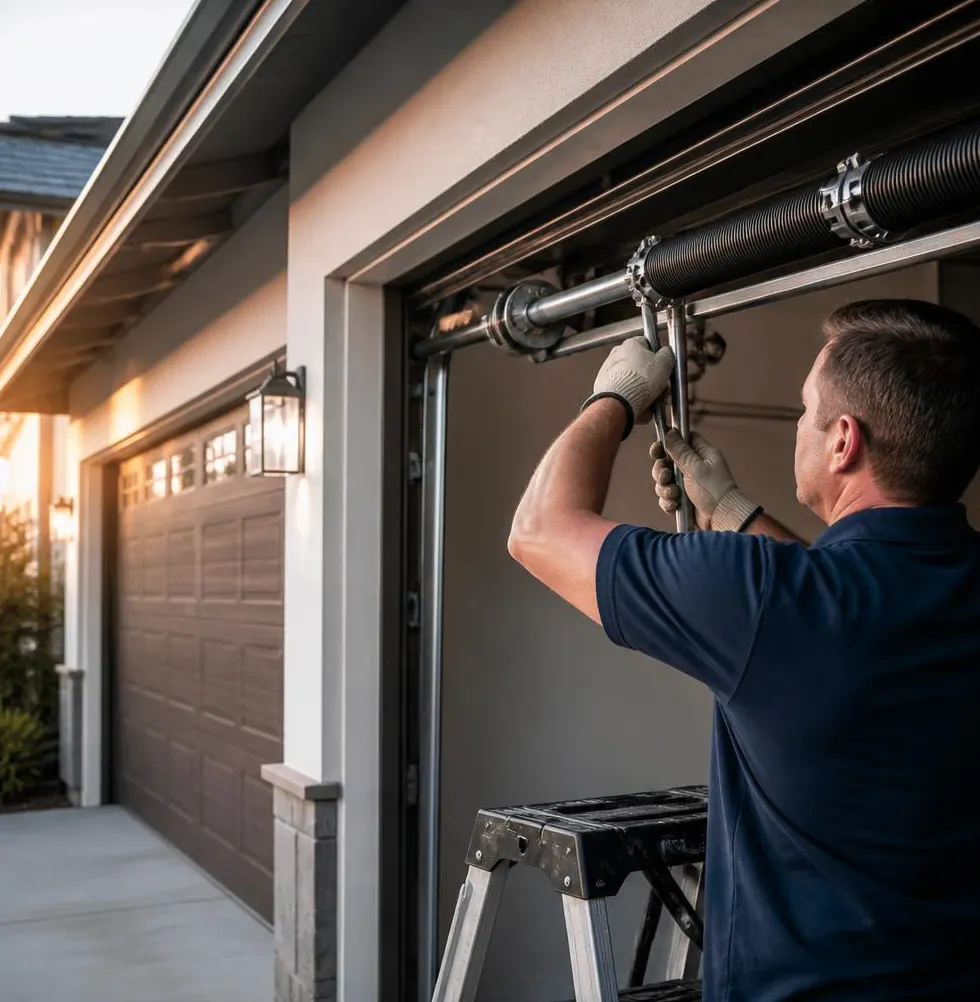
Torsion springs are metal, and metal contracts slightly in cooler weather, which can make the spring tension feel a notch tighter or looser than usual — enough to throw off the balance the opener depends on. This is checked by disengaging the opener and manually lifting the door to see if it holds at roughly the halfway point. If it doesn't, the spring tension needs adjustment or the spring itself may be worn and due for replacement — not a DIY job, since torsion springs are under serious load.
5. Opener Limit and Force Settings
If the door struggles but the hardware and springs check out, the opener's limit and force settings get tested next. Temperature swings can shift chain or belt tension slightly, which sometimes trips the opener's safety reversal before the door finishes closing. The fix is recalibrating the limit switches and force settings, and checking the drive chain or belt for proper tension.
6. Swollen Panels
Last on the list, especially for wood or composite doors, is panel swelling from moisture absorption. A door that's swollen even slightly can rub against the track, which feels like dragging or sticking rather than a clean stop. This usually means adjusting track spacing slightly or, if the swelling is severe or recurring, replacing the affected panel with one rated for Florida humidity.
When to Call Jasper Garage Door Repair
If your door hesitates, reverses, or won't move even after the ice or dew has cleared, don't keep running the opener — that's how a stuck seal turns into a stripped gear or a damaged panel. We start with a full inspection, check spring balance, and handle Garage Door Spring Repair on the spot if tension is off. If this is the first cold-weather hiccup your door has had in a while, it's also a good sign to schedule Preventive Maintenance & Tune-Up before the next storm season — catching rust and worn seals early keeps small issues from becoming expensive ones.
Give Jasper Garage Door Repair a call — we serve Jasper, White Springs, Jennings, Live Oak, Lake City, Madison, Valdosta, and Mayo, and we'll have your door moving smoothly again.